Showing posts with label Stephen King. Show all posts
Showing posts with label Stephen King. Show all posts
Tuesday, June 3, 2014
Innate Talents: Does Everyone Have Them?
This summary is not available. Please
click here to view the post.


Monday, May 19, 2014
Sharing Your Greatest Accomplishment and Bucket List: I'll Show You Mine and Hope You Show Me Yours
My post on Saturday was focused on my sister-in-law earning her Bachelor's Degree at the age of gettingprettyclosetoforty. It got me thinking a lot about the concept of accomplishments ... and, strangely, of bucket lists (things you want to do before you die).
I asked that anyone reading the post share his or her greatest accomplishments and the top five bucket list items.
Only one person actually did this, and that was on Facebook. I was kind of daunted for a moment until I went to do it myself and realized that it was a hard task I had set forward ... in fact, I wasn't sure I'd be able to do it myself.
Why?
Well, because there was the easy route on my greatest accomplishments ... and it would not have been a cop-out, because I truly believe that these three bright, beautiful ladies are my greatest accomplishment.
 And the more I thought about it, the more discouraged I got since I didn't seem to have any tangible accomplishments other than my children.
I thought about focusing on how I survived being married to a man who changed into a violent and abusive alcoholic, but that doesn't seem like an accomplishment, per se.
Then I figured that surviving a rape (and the repercussions, which I sometimes think were worse than the rape itself) was kind of a big accomplishment. However, I realized that I still have a lot of work left to do before I can say "I survived" because I am still reliving that event regularly, so that certainly makes it less of an accomplishment on my part and more sheer luck.
A common theme seemed to be developing, and the more I thought about it, the more I realized that my greatest accomplishment is surviving. I don't really feel compelled to elaborate on that, and I definitely have to think more about it before I write, but I think that is probably my big accomplishment (other than my girls).
That really is kind of sad ...
I mean, I've written a book (not published yet, and I've accepted that it probably won't be), I've taught hundreds of students, I cook a mean meatloaf, I won some award for excellence my last semester at UNH, but none of those things feel like me ... which doesn't make much sense, does it?
So, yeah, I'm stating my ability to survive tragedies, travesties, and everyday life as my greatest (non-daughter) accomplishment. And I'm not even sure how good I am at that ... Blaaaaaaaaah.
Onto the bucket list ...
Here are five things I'd like to do before I die:
1. Write and have published a book about my experiences. I'm still not sure if I should try to pass it off as fiction or if I should just state for the record that it's a memoir.
2. Drive across the country, hitting every state along the way, by myself. I think it would be an educational and esoteric experience, so I would want to be alone to soak it all up.
3. Meet Stephen King and explain to him (in a non-creepy way) the impact that his books, particularly the seven plus Dark Tower books, have had on my life.
4. Complete a genealogy of all aspects of my family. I think there might be some very interesting things there, and I'd be curious to see if patterns go back as far as I think they could.
5. Swim with sharks.
So if you are more articulate than I am, please share your biggest accomplishment and your bucket list in the comments. I'm very curious to see what everyone wants to do.
Looking forward to reading them!
I asked that anyone reading the post share his or her greatest accomplishments and the top five bucket list items.
Only one person actually did this, and that was on Facebook. I was kind of daunted for a moment until I went to do it myself and realized that it was a hard task I had set forward ... in fact, I wasn't sure I'd be able to do it myself.
Why?
Well, because there was the easy route on my greatest accomplishments ... and it would not have been a cop-out, because I truly believe that these three bright, beautiful ladies are my greatest accomplishment.
I thought about focusing on how I survived being married to a man who changed into a violent and abusive alcoholic, but that doesn't seem like an accomplishment, per se.
Then I figured that surviving a rape (and the repercussions, which I sometimes think were worse than the rape itself) was kind of a big accomplishment. However, I realized that I still have a lot of work left to do before I can say "I survived" because I am still reliving that event regularly, so that certainly makes it less of an accomplishment on my part and more sheer luck.
A common theme seemed to be developing, and the more I thought about it, the more I realized that my greatest accomplishment is surviving. I don't really feel compelled to elaborate on that, and I definitely have to think more about it before I write, but I think that is probably my big accomplishment (other than my girls).
That really is kind of sad ...
I mean, I've written a book (not published yet, and I've accepted that it probably won't be), I've taught hundreds of students, I cook a mean meatloaf, I won some award for excellence my last semester at UNH, but none of those things feel like me ... which doesn't make much sense, does it?
So, yeah, I'm stating my ability to survive tragedies, travesties, and everyday life as my greatest (non-daughter) accomplishment. And I'm not even sure how good I am at that ... Blaaaaaaaaah.
Onto the bucket list ...
Here are five things I'd like to do before I die:
1. Write and have published a book about my experiences. I'm still not sure if I should try to pass it off as fiction or if I should just state for the record that it's a memoir.
2. Drive across the country, hitting every state along the way, by myself. I think it would be an educational and esoteric experience, so I would want to be alone to soak it all up.
3. Meet Stephen King and explain to him (in a non-creepy way) the impact that his books, particularly the seven plus Dark Tower books, have had on my life.
4. Complete a genealogy of all aspects of my family. I think there might be some very interesting things there, and I'd be curious to see if patterns go back as far as I think they could.
5. Swim with sharks.
So if you are more articulate than I am, please share your biggest accomplishment and your bucket list in the comments. I'm very curious to see what everyone wants to do.
Looking forward to reading them!
Wednesday, May 14, 2014
A New Direction: The Philosophy of All of Us
When I first started this blog, I was in a very different place emotionally, physically, and about any other -ly you can think of.
Me in 2014
 Me in 2010


I'm going through some pretty hard-core health drama at the moment, and I have found myself unable to write. My plan is to move this blog in a new direction, to either write about topics you (my readers) recommend or what I see on the news. Or maybe the naked guy in a Santa jacket my husband and daughter saw at the ice cream shop yesterday.
If there are topics you'd like me to tackle, please either comment below or read through some of the posts I'm linking and ask for clarification or to look at something from a different angle. You can contact me at kloud1026 at yahoo(dot)com. I have got to get rid of this stupid writer's block (I intend to leave a mark on the world in some way), so please, I encourage suggestions for writing topics.
Going back to the beginning of this blog (gulp), here are some things I think might be interesting reads for newcomers ...
* My sister and I had the most epic Facebook conversation ever. It gets into horse urine and lettuce and really odd places. I just peed a little when I reread it ;-p
* In 1998, I was raped at a small party at a friend's house. I can say those words aloud now, but back when I wrote this, I could only write them.
* Stephen King on writing before he wrote On Writing; in fact, he compares it to masturbation. Okay, he's a little weird, but best author ever, really!
* I'm quite amused by my random ramblings about pink tissues. Who knew?
* This is where I honor the man my ex-husband used to be. I forgot some of the finer things about him, and I'm sorry to report that they haven't returned.
* I got caught up on why children's television is so milquetoast these days. It's a bit soap-boxy, but I enjoyed rereading it.
* If you know me well at all, you know I am fascinated by Charles Manson. That is explained a bit here.
* If you are from New Hampshire, you are probably familiar with the name Michael Addison. I am still bothered by the potential racism in a criminal case here in the Granite State.
* Way back in 2009, I got rather indignant at the whole "Lipstick on a Pig" debacle during the Obama vs. McCain election.
* I used Socrates to talk about the Easter Bunny in this post. That sort of makes it a must-read.
I guess that's a pretty wide variety of posts for you to read, if you're interested. Again, starting tomorrow, I am blogging daily. I am hoping desperately to find something to write about since I've been blocked for so long. Please share your ideas in comments or via e-mail and let me know if you read any of those Golden Oldies listed above.
I'm sort of laughing and crying both right now ... and wishing I had a pink tissue.
Be well,
<3 katie="" p="">
Me in 2014
I'm going through some pretty hard-core health drama at the moment, and I have found myself unable to write. My plan is to move this blog in a new direction, to either write about topics you (my readers) recommend or what I see on the news. Or maybe the naked guy in a Santa jacket my husband and daughter saw at the ice cream shop yesterday.
If there are topics you'd like me to tackle, please either comment below or read through some of the posts I'm linking and ask for clarification or to look at something from a different angle. You can contact me at kloud1026 at yahoo(dot)com. I have got to get rid of this stupid writer's block (I intend to leave a mark on the world in some way), so please, I encourage suggestions for writing topics.
Going back to the beginning of this blog (gulp), here are some things I think might be interesting reads for newcomers ...
* My sister and I had the most epic Facebook conversation ever. It gets into horse urine and lettuce and really odd places. I just peed a little when I reread it ;-p
* In 1998, I was raped at a small party at a friend's house. I can say those words aloud now, but back when I wrote this, I could only write them.
* Stephen King on writing before he wrote On Writing; in fact, he compares it to masturbation. Okay, he's a little weird, but best author ever, really!
* I'm quite amused by my random ramblings about pink tissues. Who knew?
* This is where I honor the man my ex-husband used to be. I forgot some of the finer things about him, and I'm sorry to report that they haven't returned.
* I got caught up on why children's television is so milquetoast these days. It's a bit soap-boxy, but I enjoyed rereading it.
* If you know me well at all, you know I am fascinated by Charles Manson. That is explained a bit here.
* If you are from New Hampshire, you are probably familiar with the name Michael Addison. I am still bothered by the potential racism in a criminal case here in the Granite State.
* Way back in 2009, I got rather indignant at the whole "Lipstick on a Pig" debacle during the Obama vs. McCain election.
* I used Socrates to talk about the Easter Bunny in this post. That sort of makes it a must-read.
I guess that's a pretty wide variety of posts for you to read, if you're interested. Again, starting tomorrow, I am blogging daily. I am hoping desperately to find something to write about since I've been blocked for so long. Please share your ideas in comments or via e-mail and let me know if you read any of those Golden Oldies listed above.
I'm sort of laughing and crying both right now ... and wishing I had a pink tissue.
Be well,
<3 katie="" p="">
Saturday, August 18, 2012
Rereading Books--Do You or Don't You?
I am an avid rereader of books, and I find myself having to explain why on a fairly regular basis in a variety of settings and situations.
I don't know why the concept of rereading is so foreign to some people. I can't imagine just reading a book once, and saying, "That was cool" or, "That really got me thinking" or, "I am so appalled at this piece of garbage I can't understand how it's on the freaking best-seller list when I can't get my book published", or whatever.
The only argument I can think of against rereading a book, in fact, is the reality that there are so many books out there and only a limited amount of time.
But I am a dork. I don't just read books, I live them. I allow them to change my life, my philosophies, my beliefs, and my outlook on things. Many of my books are in execrable condition, in fact, because I fall asleep on them, write in them, and occasionally throw them against the wall (yes, Stephen King, it's true ... I should have heeded your advice toward the end of the final Dark Tower book and just stopped when you warned me to).
I also learned how to read at a freakishly young age. I read Cujo as a first grader, and as you can imagine, the book is rather different as a teen or an adult. I can remember picking up a copy of The Thorn Birds at my family's beach house when summer when I was eight or nine (I'd read pretty much every other book there by then) and loving the writing, the history, the characters, but knowing somehow that I was missing the point. There are some points you just can't get when you haven't reached puberty.
I've also found that books are very different to me based on where I am at in my own life.
I have read this book over 200 times. I also teach it.
 I was a child when I first read To Kill a Mockingbird, and so I identified with Scout. I was a tomboy. My father was a lawyer, and not just a lawyer but one that was occasionally involved in cases that touched him on a moral basis. I was a tomboy with an older brother. And so on.
As I grew older, though, I read Harper Lee's masterpiece through many, many lenses. When I became a teacher and realized the cruelty that some kids are raised with, my heart ached for Boo Radley and the Ewell children. Coming to the whole "the universe works" conclusion about life, dealing with rape on a personal level, recognizing that there are truly evil people in the world, understanding that change comes through a lot of hard work and bitterness over the course of time ... TKAM was always there for me.
And then there's the enrichment that TKAM gave me in terms of other works of literature. I loved Joe R. Lansdale's The Bottoms (and strongly recommend it if you haven't read it), but I would not have appreciated it the same way if not for Lee's work. My Truman Capote phase was far cooler because I just thought of him as Dill.
It's not just Harper Lee and, of course, Stephen King (whose Dark Tower series completely altered my belief system).
Simply put, there are almost no books I've only read once ... and I've read an awful lot of books.
So how about you? Do you reread? Are you a selective rereader (in other words, are there some books you'll tackle more than once, but it's not the norm)? Or are you of the ilk that reads a book once and calls it good?
I don't judge any approaches, by the way ... I'm just curious about where the wider world stands on the issue (I know my family, friends, and students think I'm kind of bizarre regarding books).
I don't know why the concept of rereading is so foreign to some people. I can't imagine just reading a book once, and saying, "That was cool" or, "That really got me thinking" or, "I am so appalled at this piece of garbage I can't understand how it's on the freaking best-seller list when I can't get my book published", or whatever.
The only argument I can think of against rereading a book, in fact, is the reality that there are so many books out there and only a limited amount of time.
But I am a dork. I don't just read books, I live them. I allow them to change my life, my philosophies, my beliefs, and my outlook on things. Many of my books are in execrable condition, in fact, because I fall asleep on them, write in them, and occasionally throw them against the wall (yes, Stephen King, it's true ... I should have heeded your advice toward the end of the final Dark Tower book and just stopped when you warned me to).
I also learned how to read at a freakishly young age. I read Cujo as a first grader, and as you can imagine, the book is rather different as a teen or an adult. I can remember picking up a copy of The Thorn Birds at my family's beach house when summer when I was eight or nine (I'd read pretty much every other book there by then) and loving the writing, the history, the characters, but knowing somehow that I was missing the point. There are some points you just can't get when you haven't reached puberty.
I've also found that books are very different to me based on where I am at in my own life.
I have read this book over 200 times. I also teach it.
As I grew older, though, I read Harper Lee's masterpiece through many, many lenses. When I became a teacher and realized the cruelty that some kids are raised with, my heart ached for Boo Radley and the Ewell children. Coming to the whole "the universe works" conclusion about life, dealing with rape on a personal level, recognizing that there are truly evil people in the world, understanding that change comes through a lot of hard work and bitterness over the course of time ... TKAM was always there for me.
And then there's the enrichment that TKAM gave me in terms of other works of literature. I loved Joe R. Lansdale's The Bottoms (and strongly recommend it if you haven't read it), but I would not have appreciated it the same way if not for Lee's work. My Truman Capote phase was far cooler because I just thought of him as Dill.
It's not just Harper Lee and, of course, Stephen King (whose Dark Tower series completely altered my belief system).
Simply put, there are almost no books I've only read once ... and I've read an awful lot of books.
So how about you? Do you reread? Are you a selective rereader (in other words, are there some books you'll tackle more than once, but it's not the norm)? Or are you of the ilk that reads a book once and calls it good?
I don't judge any approaches, by the way ... I'm just curious about where the wider world stands on the issue (I know my family, friends, and students think I'm kind of bizarre regarding books).
Sunday, August 12, 2012
The Quasi-Agoraphobic Homebody Traveled Thrice in the Past Week
Yup, it's true, I traveled three times during the past week. I know, I can't believe it either ;-)
Each trip is worthy of (and will be receiving) its own post, but I hate when I go too long without posting, so I figured I'd give you a taste ...
1. Baltimore, MD
I flew in an airplane (this is huge ... flying is probably my greatest fear) to visit my sister and help her and the family move (and experienced the great wallet adventure).
2. Nashua, NH
I went to an education conference. This might sound boring (education conferences often are, sadly), but it was really pretty amazing :-)
3. Bangor, ME
I visited my aunts in what was my first real vacation in eons. It was relaxing, fun, enlightening, and just remarkable in a zillion ways I'll elucidate on later.
Ironically, I slept like a baby throughout my voyages but tonight, despite Ambien, insomnia has set in.
Hey, at least you got a(n albeit pathetic) post out of it ;-)
Also, I'm trying to encourage guest posts from other bloggers, so go here for more information if you're so inclined (I hope you are :-))
Oh, and here's a pic of Henry and I in front of Stephen King's house ... many adventures over the past week, guys, seriously :-)

Each trip is worthy of (and will be receiving) its own post, but I hate when I go too long without posting, so I figured I'd give you a taste ...
1. Baltimore, MD
I flew in an airplane (this is huge ... flying is probably my greatest fear) to visit my sister and help her and the family move (and experienced the great wallet adventure).
2. Nashua, NH
I went to an education conference. This might sound boring (education conferences often are, sadly), but it was really pretty amazing :-)
3. Bangor, ME
I visited my aunts in what was my first real vacation in eons. It was relaxing, fun, enlightening, and just remarkable in a zillion ways I'll elucidate on later.
Ironically, I slept like a baby throughout my voyages but tonight, despite Ambien, insomnia has set in.
Hey, at least you got a(n albeit pathetic) post out of it ;-)
Also, I'm trying to encourage guest posts from other bloggers, so go here for more information if you're so inclined (I hope you are :-))
Oh, and here's a pic of Henry and I in front of Stephen King's house ... many adventures over the past week, guys, seriously :-)

Wednesday, February 15, 2012
Mourning the Loss of Stephen King's "Rage"

If you heave a huge boulder in, the splash--and possible impacts--are larger.
Both rock-skipping and boulder-hurling are kind of cool to look at, to contemplate, to consider the possible effects on the oceanic ecosystem beneath.
Which leads me to Stephen King's short novel Rage, which he wrote as his malevolent pseudonym, Richard Bachman ... and which is now out of print at his request.
I read Rage a long time ago, and rereading it had been on my agenda literally for years, but it was one of those things I never got around to doing. Then, it was out of print--the other works in that omnibus known as The Bachman Books--The Long Walk, Roadwork, and The Running Man--have been republished as individual books under King's own moniker, but Rage was slightly more elusive.
I was over at Henry's a few weeks ago, and he was going through his vast collection of books (one of the things that I love about Henry is that he might possibly own more books than I do, a feat which takes skill). My urge to read Rage returned and, when I mentioned it, Henry whipped out a copy of The Bachman Books.
Needless to say, I was pretty pumped.
If you don't know the basic premise to Rage, it involves a clearly disturbed high school senior named Charlie Decker who takes his Algebra II class hostage, killing two teachers in the process and keeping his classmates subdued (at least at first ...) with the gun he smuggled in.
Yeah, it's disturbing. Yeah, I get why King felt some guilt following the association of the book with a number of school shootings, most notably the 1997 shooting at Kentucky's Heath High School when senior Michael Carneal fired a .22 pistol at a youth prayer group, killing three girls and injuring five others. A copy of Rage was apparently found in Carneal's locker.
Here's the thing, though ...
There are some deranged people out there. A lot of them. You can blame music, video games, books, Ted Bundy even infamously blamed porn for his murderous streak ... but it only goes so far.
I can't imagine that I'm making some sort of negative judgment on Stephen King, who I think is pretty much one of the most amazing human beings on the planet, but ... well, yeah.
Because Rage is an incredible book.
King will go down in history as a literary master of characterization. He doesn't pull punches, which is one of the reasons he's such a genius. His characters are not always nice people, and they always--ALWAYS--have flaws. They're real, people we can all imagine knowing in reality.
Yeah, Charlie Decker is off his rocker.
However, he didn't get there by accident.
His abusive father, who mistreated him physically throughout his childhood and went after him with a hatchet with murderous intent, who made a comment on a hunting trip that Charlie overheard about cutting off his mother's nose if he ever caught her with another man, unquestionably played a role.
As did his mother, who took him into her sewing room and comforted him with hot chocolate to mitigate his father throwing him to the ground with all his strength after he broke a bunch of storm windows (which seemed like a good idea to a three-year-old Charlie), who forced him to wear a formal suit to the birthday party of a girl he was crushing on because she wanted to make a good impression on the young lady's mother.
And let's not forget the science teacher that Charlie almost killed with a socket wrench shortly before the hostage-taking incident. Yeah, that's the teacher that forced Charlie to the blackboard to solve a complicated chemical equation then yelled at the young man repeatedly when he couldn't get it right, who berated him in front of the class ...
Charlie had just returned to school following his suspension for the horrible beating which nearly resulted in the death of the science teacher when the events of the story begin.
Now, I'm not defending Charlie Decker, nor am I trying to portray him in any sort of heroic terms. The kid was totally off the deep end.
However, consider the life lessons inherent in the totally unhealthy relationships between Charlie and his parents, the reminder of how valuable sensitivity is for teachers, not to mention others in positions of power. It's ... well, just striking.
I was also stricken almost to the point of tears at moments of beauty that showed through very early in the book.
A girl I didn't know passed me on the second-floor landing, a pimply, ugly girl wearing big horn-rimmed glasses and carrying a clutch of secretarial-type books. On impulse I turned around and looked after her. Yes; yes. From the back she might have been Miss America. It was wonderful.
Tell me that's not brilliant writing, a truly remarkable sentiment that can really make you think about things differently. The book is full of gems like that, and it's a shame that the stigma that surrounds school shootings has taken away a work of literature that contains not just brilliant writing but also an in-depth look into a disturbed mind and seeing that, like all of us, it is still capable of seeing good in the world.
I don't want to spoil the story overmuch, but the gist is that Charlie somehow gets his classmates to spill their souls, to come to terms with their own personal demons in the public forum he's somehow created inside the classroom he's co-opted. Surely his ability to make a safe environment for his classmates while holding a gun--albeit loosely--on them is amazing.
Obviously, there's more than a bit of Stockholm Syndrome alluded to throughout the course of the novel, not to mention Charlie gaining the upper hand in figures of authority ranging from school officials to the police getting him hard-core points with this classmates.
Consider these stories, though, that come to light in a kind of warped impromptu group therapy session that springs up while the body of a teacher goes into rigor mortis on the floor ...
* A girl publicly admits that her mother is a whore ... and she loves her in spite of it.
* A young man nicknamed "Pig Pen" shares the pain of being raised by a coupon-clipping cheapskate whose penny-pinching proclivities contribute to his one new shirt a year ... and hence his nickname
* The quintessential "nice girl" losing her virginity to the Big Man On Campus, finding it wasn't all it was cracked up to be, and making it right by hooking up with a dirty, dangerous hoodlum at a local roller skating rink
And so on.
Issues for the ages, seriously. These were worthy of conversation when the book was originally published in 1977 (when, by the way, I was not even a year old), and they are still relevant today ... perhaps even more so when you put the very fact of their longevity into the conversation.
Even the induced breakdown of the aforementioned BMOC by his classmates is an opportunity for discussions of huge portent by a huge population, young and old alike--this is a bridge-gapper if I've ever seen one ... and, as a high school English teacher, I've seen a lot.
I love books, which any regular reader of this blog knows. I love to lose myself in books, and I love to discuss them. If those discussions were kept to "safe" topics, it would be limiting.
The best conversations are never based in mundane topics.
You talk about why the Komen Foundation tried to stop their annual $600,000 donation to Planned Parenthood that was used exclusively for breast cancer screening just because 8% of Planned Parenthood's overall service involve abortions. You talk about the banning of The Adventures of Huckleberry Finn or To Kill a Mockingbird . You debate the so-called Ground Zero Mosque.
I mean, that's how you learn. That's how you grow. If all of my friends agreed with everything I say, I'd be pretty bored.
And that's how I feel about books. The best books are the ones that bring out a visceral reaction in me, ones that make me think and want to engage in discourse with others to explore the human condition.
Rage was a perfect book for opening up the doors to conversations that are in the "let's not talk about it" zone, and that makes me both sad and scared.
As a final note, Marilyn Manson was interviewed by Michael Moore during filming of Bowling for Columbine. Manson, who was tangentially blamed for influencing the unspeakable actions of Eric Harris and Dylan Klebold, had this to say when asked what he would say to the Columbine kids and community if given the chance.
"I wouldn't say a single word to them--I would listen to what they have to say, and that's what no one did."
Conversations about school shootings are a veritable minefield, and I don't envy artists ranging from Marilyn Manson to Stephen King for feeling the pain.
I just think it's a shame that the opportunities afforded by Rage have been taken off the table ... because not talking about it, not thinking about it, avoiding the fact that there are potential Charlie Deckers in schools all over the country is definitely a step backward.
Saturday, July 30, 2011
Books That Changed Your Life
It's funny how sometimes different parts of your life come together to create perfect moments, especially valuable when you're trying to avoid writer's block (both on your blog and with your own writing).
I'm a slapdash writer--a talented writer (as Stephen King once noted, "Talent is cheaper than table salt. What separates the talented individual from the successful one is a lot of hard work")--but a lazy, disorganized, fits-and-spurts kind of writer, the kind of writer that will go weeks without writing a thing and then crank out thirty or forty amazing pages in twenty-four hours.
I'm working hard to develop better writing habits. Really hard.
And sometimes that leads to a perfect storm of keeping you from being at a complete loss for what to write about.
I've read a lot of books over the years, but the books that actually changed my life are in a category of their own. I've put my top five down here, and I would encourage you to consider doing a post on this (it's actually a very telling and philosophical journey).
I've left a linky thing at the bottom of this post, so please link up if you go for this so I can check out the books that shaped and molded each of you. Oh, and please feel free to leave comments ... I sort of thrive on comments (another motivation to keep on blogging, right ;-)?).
So, five books that have changed my life ...
1. The Dark Tower (series of seven books) by Stephen King

 Honestly, this series changed my outlook on the entire world. It's what started my fascination with philosophy, with thinking about things on a higher level, of exploring the possibilities of parallel universes, of seeing how Shakespeare does not hold the patent on the concept of universal themes, of ....
Well, I'll stop rambling now.
These books are not easy reads (they're very well-written and interesting and such, but you have to be willing to twist your brain in unusual and sometimes difficult ways to wrap your head around them); even Stephen King fans have struggled with these books.
All I have to say is, they blew my mind. Totally blew my mind.
2. The Thorn Birds by Colleen McCullough

 I first read this book when I was at my family's beach house one summer. I'd read all the books I'd brought with me, and this was before we had cable television at the beach house, which contains an interesting collection of literature (basically, stuff that my mother and uncles read in high school, my grandfather's golf books, my grandmother's needlepoint books, and so on). For some reason, The Thorn Birds had made it into this mishmash of books, and I figured one rainy summer day that I'd give it a shot.
It was the first time a book made me cry adult tears.
As a fifth grader, I obviously had no concept of romantic love, but the story of a man and woman unable to be together, yet clearly destined for each other ... well, it planted a seed.
I think the book also made me appreciate my siblings more, to be completely honest. There is a lot of death and loss related to the love between a girl and her brothers, and that pain was torturous to experience vicariously.
For me to have taken on The Thorn Birds under the circumstances I did, it's evident that I wasn't getting along with Adam and Mary one rainy summer day when the beach was off limits and the card games had gotten boring (or I'd lost a lot and pouted away with my book). Ironic that said book reminded me of how important they are to me ...
3. How the Grinch Stole Christmas by Dr. Seuss

 This book taught me how to read. Well, this book and my father. Before he went to law school, my father was a teacher, and he got really into reading with me. This book was one of my absolute favorites, and I can still remember as my father's fingers moved over each word until I understood them.
I can still recite this entire book, by the way, and the words contained therein probably played some sort of role in developing my hard-core visual memory. The brain is an amazing thing ...
4. Centennial by James Michener

 When I was in Honors English 11, my teacher had us choose an author to do a yearlong study on. We had to read one of the author's books each quarter, write analysis papers, and the final paper required us to identify a common theme that ran through each book.
I was kind of a laissez-faire student (I did well enough, at least in English class, but I neither tried very hard nor cared very much), so I gave the list to my mother and asked her to pick an author for me. She recommended Michener, and I figured I'd go with it. I should have known better when my teacher asked if I was absolutely sure about committing to Michener ...
Yeah, many of Michener's books, Centennial included, weigh almost as much as my seven-year-old does ...
I pulled my usual procrastination act and left both reading the book and writing the paper until the night before, but ... wow. I got it done, did well on it, and then proceeded to eat up Michener's entire canon.
The idea of a certain geographical location serving as almost a character, the cultures that mix together as years go by, and the connections that exist between geography, characters, history, and pretty much everything ...
James Michener taught me that vitally important lesson.
5. My completed novel (currently titled Unbreakable, but that's of course subject to change) by Katie Loud

I've written a lot about the history of this novel (which you can read about here ... it's actually kind of an interesting story as I went from a middle schooler to an adult with the same work in progress), and I think it's a pretty good read (you can read excerpts here and here, and check out a list of 25 unusual and/or interesting things about it here (this was actually a really cool exercise, by the way, and I'd recommend any writer to do this).
Bottom line, this book taught me two extremely valuable lessons that no other book could.
1. All fiction is, to one degree or another, a form of author autobiography. It's all in the details.
and
2. I can actually finish something that I've started ... even if it takes me over fifteen years ;-)
So, what five books changed your life? Link up here :-)
Monday, February 28, 2011
The Red-Tailed Hawk (And Taking The Time To See What's Right In Front Of You)
I have no common sense. Let's get that right out there. I am the person who can analyze poetry for hours, write term papers in two hours ... and who loses her keys at least once a day. I'll remind myself that I have to bring a toilet paper roll from the giant BJ's pack into the bathroom the next time I have to go, but still forget. I can understand Plato and Aristotle, but knock knock jokes go completely over my head.
One of my greatest weaknesses, as both a human being and as a writer, is that I miss the obvious, as I was reminded yesterday.
I've posted before about my dog Mollie and her affinity for balls.
Well, I was having a lazy day yesterday. A very, very lazy day. I was engrossed in a book (Sammy the Bull's memoir, in case you're curious ... I do have the strangest literary journeys sometimes) and, when Mollie started barking, I figured I'd get to a good stopping point and start lifting up couches.
But Mollie kept barking consistently, which isn't like her, so I finally looked up, and she literally had her nose to the window. I got up to look out the window, and imagine my surprise to see a hawk in the tree right outside.
It was absolutely beautiful, something I'd never before realized about hawks. It was so close that I could see every detail, could easily identify it as a red-tailed hawk based on its tail feathers.
The hawk had put up with Mollie barking without comment but evidently sensed my movement when I went to get my camera. It flew to a higher tree, and I wasn't able to get a good shot of it. Still, I watched it until it flew away.
I was reminded of Stephen King's novella "The Body" (and of Rob Reiner's excellent movie adaptation, Stand By Me), the part where Gordie LaChance encounters an unspeakably beautiful doe, something so unexpected and purely, innocently, naturally gorgeous. He's on a journey with his friends to go find a dead body, and the doe shows up while he's "on watch". It is a moment of peace and awe that he often goes back to in times of tribulation.
This hawk was kind of like that for me ... and the fact that I almost missed out on seeing it because it's all too easy sometimes to ignore Mollie's yapping is not lost on me. It's strange where you get life lessons from sometimes ...
One of my greatest weaknesses, as both a human being and as a writer, is that I miss the obvious, as I was reminded yesterday.
I've posted before about my dog Mollie and her affinity for balls.
My golden retriever, Mollie, is passive aggressive.
Most dogs I've owned are very sweet-tempered. My black lab, Sonja, for example, just kind of goes with the flow, is thrilled to see you when you get home at the end of the day, sits at your feet when you're reading a book, is thrilled when you take her outside to play, and so on.
Mollie is just crazy.
The best example of this, I guess, is her obsession with balls. She always has a ball in her mouth, and when you're inside the house, she'll drop the slimy thing on your lap as if to say, "Throw it, throw it, I want to play fetch!" The logical response to this action, of course, is to pick up the ball, walk outside, and start a rousing game of fetch.
Um ... nope. You throw the ball once and Mollie goes running after it, retrieves it, and comes back to dance around your feet ... and refuses to give you the ball. After you try to pry it out of her mouth a few times to no avail, you give up and go back inside ... at which point, Mollie comes and drops the slimy ball in your lap and the cycle continues.
Even more annoying, though, is when you give her the ball back and say, "No, not gonna do it right now" or something like that. She hides the ball under heavy pieces of furniture and scratches at it until you lift it up, straining back muscles in the process, so she can get the ball ... and, two minutes later, drop the slimy thing in your lap.
Well, I was having a lazy day yesterday. A very, very lazy day. I was engrossed in a book (Sammy the Bull's memoir, in case you're curious ... I do have the strangest literary journeys sometimes) and, when Mollie started barking, I figured I'd get to a good stopping point and start lifting up couches.
But Mollie kept barking consistently, which isn't like her, so I finally looked up, and she literally had her nose to the window. I got up to look out the window, and imagine my surprise to see a hawk in the tree right outside.
It was absolutely beautiful, something I'd never before realized about hawks. It was so close that I could see every detail, could easily identify it as a red-tailed hawk based on its tail feathers.
The hawk had put up with Mollie barking without comment but evidently sensed my movement when I went to get my camera. It flew to a higher tree, and I wasn't able to get a good shot of it. Still, I watched it until it flew away.
I was reminded of Stephen King's novella "The Body" (and of Rob Reiner's excellent movie adaptation, Stand By Me), the part where Gordie LaChance encounters an unspeakably beautiful doe, something so unexpected and purely, innocently, naturally gorgeous. He's on a journey with his friends to go find a dead body, and the doe shows up while he's "on watch". It is a moment of peace and awe that he often goes back to in times of tribulation.
This hawk was kind of like that for me ... and the fact that I almost missed out on seeing it because it's all too easy sometimes to ignore Mollie's yapping is not lost on me. It's strange where you get life lessons from sometimes ...
Monday, January 31, 2011
Elizabeth Strout's "Olive Kitteridge" Captures the Heck Out of a Small New England Town
Elizabeth Strout's Olive Kitteridge has been my "car book" for a couple of weeks now. I should probably explain, I'm sort of like squirrels when it comes to books ... I hide them everywhere so that I'll have one on hand for every occasion.
Right now, my upstairs book is The Kennedy Women: The Saga of an American Family . My downstairs book is The Scarpetta Factor
 . My classroom book is Where the Red Fern Grows
 , which I've read a hundred times and still love.
And, like I said, Olive Kitteridge has been my car book for a bit so that when I have to go pick Addie up from practice (or when I'm stuck at really long red lights) I have something to do.
I think I ate something funky over the weekend, so let's just say that I went home sick under less than ideal circumstances with many a stop at random gas stations along the way. I'm feeling much better now, which is why I think (I hope) it was just, like, something ingested (or something that my pancreas wasn't thrilled about ... Chuck E. Cheese pizza? Perhaps) instead of a bug. But I'm way off track ...
Yeah, the point is that I brought Olive Kitteridge inside to read while I convalesced, and just totally lost myself in it.
When I was in high school, I saw Grace Metalious' Peyton Place (Hardscrabble Books-Fiction of New England) on a library shelf. Although I'd heard many a sordid reference to it, I'd never read it. Needless to say, I got down to business and totally submersed myself in a world that was all too familiar.
Although I grew up on the New Hampshire seacoast, where we have more in common with Bostonians than the small town, stereotypical, "Ayuh"-stating hick, I am familiar with those small towns. Metalious had it down cold. As did Stephen King in Salem's Lot , John Irving to a certain degree, and Elizabeth Strout with the truly amazing Olive Kitteridge.
I'm not a book reviewer or anything, but I find it amazing when authors are able to capture the nuances of a region with such skill. It's like driving north a few towns, going into the general store, and bumping into some real characters ... totally relatable!
Right now, my upstairs book is The Kennedy Women: The Saga of an American Family
. My downstairs book is The Scarpetta Factor. My classroom book is Where the Red Fern Grows, which I've read a hundred times and still love. And, like I said, Olive Kitteridge has been my car book for a bit so that when I have to go pick Addie up from practice (or when I'm stuck at really long red lights) I have something to do.
I think I ate something funky over the weekend, so let's just say that I went home sick under less than ideal circumstances with many a stop at random gas stations along the way. I'm feeling much better now, which is why I think (I hope) it was just, like, something ingested (or something that my pancreas wasn't thrilled about ... Chuck E. Cheese pizza? Perhaps) instead of a bug. But I'm way off track ...
Yeah, the point is that I brought Olive Kitteridge inside to read while I convalesced, and just totally lost myself in it.
When I was in high school, I saw Grace Metalious' Peyton Place (Hardscrabble Books-Fiction of New England)
on a library shelf. Although I'd heard many a sordid reference to it, I'd never read it. Needless to say, I got down to business and totally submersed myself in a world that was all too familiar.Although I grew up on the New Hampshire seacoast, where we have more in common with Bostonians than the small town, stereotypical, "Ayuh"-stating hick, I am familiar with those small towns. Metalious had it down cold. As did Stephen King in Salem's Lot
, John Irving to a certain degree, and Elizabeth Strout with the truly amazing Olive Kitteridge.I'm not a book reviewer or anything, but I find it amazing when authors are able to capture the nuances of a region with such skill. It's like driving north a few towns, going into the general store, and bumping into some real characters ... totally relatable!
Sunday, January 23, 2011
Seven Random Facts About Me
I just had the greatest time reading seven random facts about Mrs. Nesbitt. I enjoyed reading her "random facts"(which were actually totally awesome stories and not random facts at all ;)) so much, in fact, that I figured I'd give it a shot myself. I strongly encourage you to check Mrs. Nesbitt's out, too ... oh, and leave a link in the comments if you decide to do this yourself because I love reading these!
1. My desk at work is a landmark.
And not in a good way. It is piled high with ever-shifting piles of papers that end up mixed together in new and unusual ways. If I was a science teacher instead of an English teacher, it would be a great way to teach plate tectonics. Interestingly, though, I have never lost a student's work, a fact that they comment on regularly.
STUDENT: Ms. Loud, I don't understand it. Your desk looks like a tornado went through it, and you never lose our stuff. Ms. Spike has a color-coded filing cabinet with folders for not just each student but each class and loses our work all the time.
I can't explain this to children, of course, but it's the ADHD mind at work. I will always be disorganized ... there's no way around it. However, I operate under the "central location" theory. If every piece of student work goes in a central location (in other words, my desk), I know it's there somewhere ... it might take me a bit to find it amidst the other thousand papers on my desk, but I know it's there.
2. I met my ten-year-old equivalent last week.
I was at another school with several other teachers to observe their reading program and the interventions they had in place for struggling readers so that we could bring it back to our school. One of the other teachers also happens to be one of my best friends, and suffice it to say that we should not be allowed to go on professional development days together ... we laugh entirely too much.
So we're observing a class right after lunch, and everyone's a little bit punchy, but Holly and I are by far the goofiest. There's this one little guy who just cannot sit still. If you've ever seen a caricature of a kid with ADHD, this was it.
And Holly leans over to the other teachers and whispers, "This is what it's like working with Katie", and we all just lost it.
When the kid was sitting backwards in his chair literally hanging off of it, it occurred to me that I sometimes teach in that position, and I tried to stifle the laughter until I looked at my colleagues and saw that they were all cracking up ... they've all seen me teach, after all.
Although I thought this kid was the coolest, it occurred to me that I must at times be very annoying to the people I work with ;)
3. My favorite author is Stephen King.
I am a voracious reader. I've read all the classics, all the chick lit, all the pretty much everything, and nobody can tell a story like King. Nobody can make characters that you care about, that seem quite as real as the ones he creates.
Nobody can make a book about the craft of writing as interesting as his On Writing, which I would make required reading for my students if there weren't budget constrictions.
I am especially obsessed with his seven-book saga The Dark Tower. I'm so obsessed that I made a blog intended to analyze and contemplate the philosophies contained therein (it doesn't get updated very often, though, although I'm working on managing my time better so I can get back to adding to it).
4. I can do a split. It's a great classroom management tool ...
5. I jumped off a moving train once.
My brother, sister, brother-in-law, and myself went to a Red Sox game, but the game ended up being the least interesting part of the day. I don't want to get into detail because I've been trying to do this story justice in writing for years and it just doesn't transfer well (it's a story made for oral storytelling), but it was totally my brother-in-law's fault.
6. My golden retriever, Mollie, is passive aggressive.
Most dogs I've owned are very sweet-tempered. My black lab, Sonja, for example, just kind of goes with the flow, is thrilled to see you when you get home at the end of the day, sits at your feet when you're reading a book, is thrilled when you take her outside to play, and so on.
Mollie is just crazy.
The best example of this, I guess, is her obsession with balls. She always has a ball in her mouth, and when you're inside the house, she'll drop the slimy thing on your lap as if to say, "Throw it, throw it, I want to play fetch!" The logical response to this action, of course, is to pick up the ball, walk outside, and start a rousing game of fetch.
Um ... nope. You throw the ball once and Mollie goes running after it, retrieves it, and comes back to dance around your feet ... and refuses to give you the ball. After you try to pry it out of her mouth a few times to no avail, you give up and go back inside ... at which point, Mollie comes and drops the slimy ball in your lap and the cycle continues.
Even more annoying, though, is when you give her the ball back and say, "No, not gonna do it right now" or something like that. She hides the ball under heavy pieces of furniture and scratches at it until you lift it up, straining back muscles in the process, so she can get the ball ... and, two minutes later, drop the slimy thing in your lap.
7. I laugh a lot.
One of the greatest gifts I've been given is the ability to find humor in pretty much any situation, a skill that both of my parents possess. They passed on some less positive traits, but the laughter that has permeated my life almost balances those out.
I can't even explain how weird my sense of humor is, or even how simple it is when you get right down to it.
Oh, wait for it ... my phone just gave me an example. Like, perhaps the prime example. Every time I get a text message (or a Facebook update), my phone says, "DROID" in a robotic voice. I've had this phone for months now, and I still crack up every time (every single time) it goes off ... and I get a fair amount of texts and Facebook stuff, so it's not like this is a rare occurrence. And it is still just so funny ...
Most people with Droids change the settings pretty quickly, but I'm just far too entertained by my phone talking to me in a robotic voice that I just can't. My friend Holly and I usually sit together during meetings, and when it's getting rather dry, she'll lean over and whisper, "DROID", and we both just lose it (it took me awhile to figure out how to silence it, so for a couple of weeks it went off all day, every day).
Oh, and during the before-Christmas talent show, we hooked my phone up to the sound system because we were playing a song off it for the eighth graders to dance to. In the middle of the song, there's a sudden, "DROID!" It was just hysterical.
So there you have it ... seven random things about me :-)
1. My desk at work is a landmark.
And not in a good way. It is piled high with ever-shifting piles of papers that end up mixed together in new and unusual ways. If I was a science teacher instead of an English teacher, it would be a great way to teach plate tectonics. Interestingly, though, I have never lost a student's work, a fact that they comment on regularly.
STUDENT: Ms. Loud, I don't understand it. Your desk looks like a tornado went through it, and you never lose our stuff. Ms. Spike has a color-coded filing cabinet with folders for not just each student but each class and loses our work all the time.
I can't explain this to children, of course, but it's the ADHD mind at work. I will always be disorganized ... there's no way around it. However, I operate under the "central location" theory. If every piece of student work goes in a central location (in other words, my desk), I know it's there somewhere ... it might take me a bit to find it amidst the other thousand papers on my desk, but I know it's there.
2. I met my ten-year-old equivalent last week.
I was at another school with several other teachers to observe their reading program and the interventions they had in place for struggling readers so that we could bring it back to our school. One of the other teachers also happens to be one of my best friends, and suffice it to say that we should not be allowed to go on professional development days together ... we laugh entirely too much.
So we're observing a class right after lunch, and everyone's a little bit punchy, but Holly and I are by far the goofiest. There's this one little guy who just cannot sit still. If you've ever seen a caricature of a kid with ADHD, this was it.
And Holly leans over to the other teachers and whispers, "This is what it's like working with Katie", and we all just lost it.
When the kid was sitting backwards in his chair literally hanging off of it, it occurred to me that I sometimes teach in that position, and I tried to stifle the laughter until I looked at my colleagues and saw that they were all cracking up ... they've all seen me teach, after all.
Although I thought this kid was the coolest, it occurred to me that I must at times be very annoying to the people I work with ;)
3. My favorite author is Stephen King.
I am a voracious reader. I've read all the classics, all the chick lit, all the pretty much everything, and nobody can tell a story like King. Nobody can make characters that you care about, that seem quite as real as the ones he creates.
Nobody can make a book about the craft of writing as interesting as his On Writing, which I would make required reading for my students if there weren't budget constrictions.
I am especially obsessed with his seven-book saga The Dark Tower. I'm so obsessed that I made a blog intended to analyze and contemplate the philosophies contained therein (it doesn't get updated very often, though, although I'm working on managing my time better so I can get back to adding to it).
4. I can do a split. It's a great classroom management tool ...
5. I jumped off a moving train once.
My brother, sister, brother-in-law, and myself went to a Red Sox game, but the game ended up being the least interesting part of the day. I don't want to get into detail because I've been trying to do this story justice in writing for years and it just doesn't transfer well (it's a story made for oral storytelling), but it was totally my brother-in-law's fault.
6. My golden retriever, Mollie, is passive aggressive.
Most dogs I've owned are very sweet-tempered. My black lab, Sonja, for example, just kind of goes with the flow, is thrilled to see you when you get home at the end of the day, sits at your feet when you're reading a book, is thrilled when you take her outside to play, and so on.
Mollie is just crazy.
The best example of this, I guess, is her obsession with balls. She always has a ball in her mouth, and when you're inside the house, she'll drop the slimy thing on your lap as if to say, "Throw it, throw it, I want to play fetch!" The logical response to this action, of course, is to pick up the ball, walk outside, and start a rousing game of fetch.
Um ... nope. You throw the ball once and Mollie goes running after it, retrieves it, and comes back to dance around your feet ... and refuses to give you the ball. After you try to pry it out of her mouth a few times to no avail, you give up and go back inside ... at which point, Mollie comes and drops the slimy ball in your lap and the cycle continues.
Even more annoying, though, is when you give her the ball back and say, "No, not gonna do it right now" or something like that. She hides the ball under heavy pieces of furniture and scratches at it until you lift it up, straining back muscles in the process, so she can get the ball ... and, two minutes later, drop the slimy thing in your lap.
7. I laugh a lot.
One of the greatest gifts I've been given is the ability to find humor in pretty much any situation, a skill that both of my parents possess. They passed on some less positive traits, but the laughter that has permeated my life almost balances those out.
I can't even explain how weird my sense of humor is, or even how simple it is when you get right down to it.
Oh, wait for it ... my phone just gave me an example. Like, perhaps the prime example. Every time I get a text message (or a Facebook update), my phone says, "DROID" in a robotic voice. I've had this phone for months now, and I still crack up every time (every single time) it goes off ... and I get a fair amount of texts and Facebook stuff, so it's not like this is a rare occurrence. And it is still just so funny ...
Most people with Droids change the settings pretty quickly, but I'm just far too entertained by my phone talking to me in a robotic voice that I just can't. My friend Holly and I usually sit together during meetings, and when it's getting rather dry, she'll lean over and whisper, "DROID", and we both just lose it (it took me awhile to figure out how to silence it, so for a couple of weeks it went off all day, every day).
Oh, and during the before-Christmas talent show, we hooked my phone up to the sound system because we were playing a song off it for the eighth graders to dance to. In the middle of the song, there's a sudden, "DROID!" It was just hysterical.
So there you have it ... seven random things about me :-)
Monday, June 22, 2009
In the Face of True Evil, We ... are Fascinated
As my teaching load will be changing for next year and I'm maybe going to be doing a major unit on the Holocaust, I received an article about Miep Gies, one of Anne Frank's "Helpers", turning 100.
If for some reason you're not familiar with Anne Frank's story, she and her family hid for two years from the Nazis in a secret attic until they were eventually discovered and sent to concentration camps where, with the exception of Anne's father Otto Frank, they all perished. Miep Gies, a former employee of Otto Frank's spice business, agreed to help hide his family in a secret annex above the company's warehouse in 1942. After the betrayal (and who was behind the betrayal remains a mystery to this day), Gies picked up the papers Anne left behind, eventually giving them to Anne's father. Otto Frank published his daughter's memoirs as The Diary of a Young Girl in 1947, and since then the memoir has served as a stark reminder of the horrors of the Holocaust from the brutally honest view of a young teenager suffering atrocities that I, for one, cannot even imagine.
The article about Gies was interesting on a variety of levels, not the least of which was her tribute to the "unnamed heroes" who willingly risked their lives to help Jews escape certain death at the hands of Nazis. The prewar Jewish population of the Netherlands was around 140,000. Of those, 107,000 were arrested and deported. According to the Red Cross, only 5,200 made it out on the other side of the war. Another 24,000 Dutch Jews, the Franks being the most visible example, went into hiding through the help of others. Of those, 8,000 were betrayed in exchange for a payoff or were simply hunted down.
Gies worked for Otto Frank as he prepared and published The Diary of a Young Girl. She went on to be an active letter-writer to people with questions from all over the world. Even after Otto Frank's 1980 death, Gies has worked tirelessly to speak out against "Holocaust-deniers" and those who write Anne Frank's memoir as a forgery. Gies herself wrote a book, the 1987 offering Anne Frank Remembered.
This is of course a very brief overview of an article I found to be fascinating. I've read The Diary of a Young Girl. I've read Elie Wiesel's Night. The Devil's Arithmetic. After the War. Number the Stars. Summer of My German Solider. Destined to Witness: Growing up Black in Nazi Germany. I've even read Mein Kampf, just to get a complete picture. Southern writer Pat Conroy tells some fascinating Holocaust tales in his novel Beach Music, although its only one strand of an incredibly complex storyline. And then there are the movies--my two favorites are Schindler's List and Vite e Bella (Life is Beautiful), although I cry copious tears at both.
Despite all that, the Holocaust is not an obsession with me as it is with many, in large part because it is so viscerally, unspeakably evil that the mere mention makes my stomach start cramping up. The world that I live in--the one that I've created in my mind, if that makes any sense--is one where people are willing to do whatever they can to help somebody else, where kindness and generosity are tantamount, where unspeakable horror doesn't happen. Of course I know academically that this isn't true, and I'm well aware that I'm quite alone in my insular world, but it makes it both easier and more difficult to focus on things like the Holocaust, evil incarnate.
That said, I do have a rather bizarre obession with the Manson murders that many people probably find out of whack. I can explain until the cows come home that it's the psychological mind control aspects and the time period that it happened in (I don't think Manson would have been able to pull off the deity thing any time before or beyond the late sixties/early seventies), but I suspect people might still find me weird for this one. Oh, and in case you're wondering, I certainly don't consider the Manson murders to be in any way, shape, or form similar to the Holocaust beyond the utter evil and blatant disregard for human life shown therein.
I guess what I'm trying to say is, evil is fascinating to a large percentage of people. It is! Are we trying to avoid evil potential in ourselves by learning about genocides or gruesome murders? Does it make us feel better to say, "I know I'd NEVER do that?" Why the interest in the macabre?
Stephen King wrote a short story called "Apt Pupil" (it was made into an absolutely dreadful movie). Your typical All-American boy has a certain fascination with the Holocaust. Imagine his surprise when he discovers through observation and young adolescent detective skills that his neighbor was once a member of the SS. A fairly powerful, very violent member of the SS. He blackmails the old man by requiring stories about the concentration camps in exchange for his silence. Of course, things get out of control and the boy obsessed with all things Holocaust learns how to become a violent killer himself through his relationship with the old Nazi.
Obviously, it's a work of fiction, but it emphasizes some obvious questions ... Why the obsession with the true face of evil? When does it cross the line to being unhealthy and even dangerous?
If for some reason you're not familiar with Anne Frank's story, she and her family hid for two years from the Nazis in a secret attic until they were eventually discovered and sent to concentration camps where, with the exception of Anne's father Otto Frank, they all perished. Miep Gies, a former employee of Otto Frank's spice business, agreed to help hide his family in a secret annex above the company's warehouse in 1942. After the betrayal (and who was behind the betrayal remains a mystery to this day), Gies picked up the papers Anne left behind, eventually giving them to Anne's father. Otto Frank published his daughter's memoirs as The Diary of a Young Girl in 1947, and since then the memoir has served as a stark reminder of the horrors of the Holocaust from the brutally honest view of a young teenager suffering atrocities that I, for one, cannot even imagine.
The article about Gies was interesting on a variety of levels, not the least of which was her tribute to the "unnamed heroes" who willingly risked their lives to help Jews escape certain death at the hands of Nazis. The prewar Jewish population of the Netherlands was around 140,000. Of those, 107,000 were arrested and deported. According to the Red Cross, only 5,200 made it out on the other side of the war. Another 24,000 Dutch Jews, the Franks being the most visible example, went into hiding through the help of others. Of those, 8,000 were betrayed in exchange for a payoff or were simply hunted down.
Gies worked for Otto Frank as he prepared and published The Diary of a Young Girl. She went on to be an active letter-writer to people with questions from all over the world. Even after Otto Frank's 1980 death, Gies has worked tirelessly to speak out against "Holocaust-deniers" and those who write Anne Frank's memoir as a forgery. Gies herself wrote a book, the 1987 offering Anne Frank Remembered.
This is of course a very brief overview of an article I found to be fascinating. I've read The Diary of a Young Girl. I've read Elie Wiesel's Night. The Devil's Arithmetic. After the War. Number the Stars. Summer of My German Solider. Destined to Witness: Growing up Black in Nazi Germany. I've even read Mein Kampf, just to get a complete picture. Southern writer Pat Conroy tells some fascinating Holocaust tales in his novel Beach Music, although its only one strand of an incredibly complex storyline. And then there are the movies--my two favorites are Schindler's List and Vite e Bella (Life is Beautiful), although I cry copious tears at both.
Despite all that, the Holocaust is not an obsession with me as it is with many, in large part because it is so viscerally, unspeakably evil that the mere mention makes my stomach start cramping up. The world that I live in--the one that I've created in my mind, if that makes any sense--is one where people are willing to do whatever they can to help somebody else, where kindness and generosity are tantamount, where unspeakable horror doesn't happen. Of course I know academically that this isn't true, and I'm well aware that I'm quite alone in my insular world, but it makes it both easier and more difficult to focus on things like the Holocaust, evil incarnate.
That said, I do have a rather bizarre obession with the Manson murders that many people probably find out of whack. I can explain until the cows come home that it's the psychological mind control aspects and the time period that it happened in (I don't think Manson would have been able to pull off the deity thing any time before or beyond the late sixties/early seventies), but I suspect people might still find me weird for this one. Oh, and in case you're wondering, I certainly don't consider the Manson murders to be in any way, shape, or form similar to the Holocaust beyond the utter evil and blatant disregard for human life shown therein.
I guess what I'm trying to say is, evil is fascinating to a large percentage of people. It is! Are we trying to avoid evil potential in ourselves by learning about genocides or gruesome murders? Does it make us feel better to say, "I know I'd NEVER do that?" Why the interest in the macabre?
Stephen King wrote a short story called "Apt Pupil" (it was made into an absolutely dreadful movie). Your typical All-American boy has a certain fascination with the Holocaust. Imagine his surprise when he discovers through observation and young adolescent detective skills that his neighbor was once a member of the SS. A fairly powerful, very violent member of the SS. He blackmails the old man by requiring stories about the concentration camps in exchange for his silence. Of course, things get out of control and the boy obsessed with all things Holocaust learns how to become a violent killer himself through his relationship with the old Nazi.
Obviously, it's a work of fiction, but it emphasizes some obvious questions ... Why the obsession with the true face of evil? When does it cross the line to being unhealthy and even dangerous?
Tuesday, April 28, 2009
Stephen King's Fascinating Analogy to the Craft of Writing
It shouldn't be any secret to anyone that's read this blog with any sort of regularity that I'm a major Stephen King fan. Some may write him off as a sell-out and an example of someone with moderate talent being in the right place at the right time, but I would argue that he is the ultimate American writer of this generation. His writing is passionate, poignant, and prolific (sorry, we're on an alliteration kick in one of my classes :-)), and I predict that he will eventually be the subject of a required college course for English literature majors, much the way Shakespeare is.
But that's not my point.
I was rereading "The Body", a novella from the 1982 collection Different Seasons, and I found a quote that really resonated with me.
If you haven't read "The Body", by the way, the odds are still pretty good that you've seen Rob Reiner's Stand by Me, a film that comes fairly close to living up to King's story. In case you haven't, though, it's the tale of four small town boys in the throes of early adolescence heading off to locate the dead body of a boy who was lost in the woods while picking blueberries. Anyway, the main character and first-person narrator, Gordie LaChance, grows up to be a bestselling author. "The Body" is essentially a flashback of this particular adventure he had with his friends and how it shaped him into both a man and a writer. I can relate all too well to Gordie's friends constantly clamoring for him to tell one of his magical stories--although I don't write as well as King, my tales did a fair amount of entertaining my friends when I was growing up.
Perhaps that remembering, that curious mix of pride and shame, is what makes this excerpt echo so strongly in my mind:
"The act of writing itself is done in secret, like masturbation--oh, I have a friend who has done things like write stories in the display windows of bookshops and department stores, but this is a man who is nearly crazy with courage, the kind of man you'd like to have with you if you just happened to fall down with a heart attack in a city where no one knew you. For me, it always wants to be sex and always falls short--it's always that adolescent handjob in the bathroom with the door locked."
I hope nobody is too offended by the sexual references there, but King (writing as "Gordie LaChance", of course, but many of King's protagonists are writers, so I think that inferences can certainly be made) seems to capture the essence of writing as a craft there.
What do you think? Is writing intensely private? Is it hard to share? Do you wish you could share with all your heart, but somehow it's too much? Is comparing the act of writing to the act of sex apt? Is there a better analogy to be made?
I'm not sure, but I do know that this quote (not in its entirety, of course, but I knew the gist--and the text of "The Body"--well enough to find it pretty easily) came almost unbidden to my mind when I got thinking about what to blog about.
That must mean something : )
But that's not my point.
I was rereading "The Body", a novella from the 1982 collection Different Seasons, and I found a quote that really resonated with me.
If you haven't read "The Body", by the way, the odds are still pretty good that you've seen Rob Reiner's Stand by Me, a film that comes fairly close to living up to King's story. In case you haven't, though, it's the tale of four small town boys in the throes of early adolescence heading off to locate the dead body of a boy who was lost in the woods while picking blueberries. Anyway, the main character and first-person narrator, Gordie LaChance, grows up to be a bestselling author. "The Body" is essentially a flashback of this particular adventure he had with his friends and how it shaped him into both a man and a writer. I can relate all too well to Gordie's friends constantly clamoring for him to tell one of his magical stories--although I don't write as well as King, my tales did a fair amount of entertaining my friends when I was growing up.
Perhaps that remembering, that curious mix of pride and shame, is what makes this excerpt echo so strongly in my mind:
"The act of writing itself is done in secret, like masturbation--oh, I have a friend who has done things like write stories in the display windows of bookshops and department stores, but this is a man who is nearly crazy with courage, the kind of man you'd like to have with you if you just happened to fall down with a heart attack in a city where no one knew you. For me, it always wants to be sex and always falls short--it's always that adolescent handjob in the bathroom with the door locked."
I hope nobody is too offended by the sexual references there, but King (writing as "Gordie LaChance", of course, but many of King's protagonists are writers, so I think that inferences can certainly be made) seems to capture the essence of writing as a craft there.
What do you think? Is writing intensely private? Is it hard to share? Do you wish you could share with all your heart, but somehow it's too much? Is comparing the act of writing to the act of sex apt? Is there a better analogy to be made?
I'm not sure, but I do know that this quote (not in its entirety, of course, but I knew the gist--and the text of "The Body"--well enough to find it pretty easily) came almost unbidden to my mind when I got thinking about what to blog about.
That must mean something : )
Sunday, April 19, 2009
Further Lyric Musings about "The Dark Tower" (Part II of II)
"Babylon" by David Gray
This sort of captures the essence of the gunslinger's being, at least in terms of relationships with other people.
NOTABLE LYRICS
"Only wish that you were here/
You know I'm seeing it so clear/
I've been afraid/
To tell you how I really feel/
Admit to some of those bad mistakes I've made"
"The Only Living Boy in New York" By Simon and Garfunkel
An interesting capturing of that city that brings forth so many, in all of its manifestations.
NOTABLE LYRICS:
"Hey let your honesty shine, shine, shine/
Da-n-da-da-n-da-da-n-da-da/
Like it shines on me/
The only living boy in New York/
The only living boy in New York."
"Black Dog" by Led Zeppelin
The color red cannot be understated in this epic.
NOTABLE LYRICS:
"I gotta roll, can't stand still/
Got a flame in my heart, can't get my fill/
Eyes that shine burning red/
Dreams of you all through my head."
"Black Muddy River" by Grateful Dead
Roland, the gunslinger, knows more about solitude than perhaps anyone else ever.
NOTABLE LYRICS:
"When it seems like the night will last forever/
And there's nothing left to do but count the years/
When the strings of my heart begin to sever/
And stones fall from my eyes instead of tears/
I will walk alone, by the black muddy river/
And dream me a dream of my own/
I will walk alone, by the black muddy river/
And sing me a song of my own"
"Deep Inside of You" by Third Eye Blind
The gunslinger had long given up on having regular companionship. He did not expect, intend, or even appreciate at first his new Ka-tet.
NOTABLE LYRICS:
"I've never felt alone/
'Til I met you/
I'm all right on my own/
'Til I met you/
And I'd know what to do if I just knew what's coming"
"Don't Look Back in Anger" by Oasis
This made me think of the Gunslinger's run-ins with mescaline. And, of course, his experiences with his own mind.
NOTABLE LYRICS:
"Slip inside the eye of your mind/
Don't you know you might find/
A better place to play/
You said that you'd never been/
But all the things that you've seen/
Will slowly fade away."
"Eyes Like Twins" by Wilson Phillips
It seems as those this is a message the Gunslinger would have wanted to get to many. His fate, tragically, was a bit different ... and the execution of such a promise was clearly beyond him, despite his best intentions.
NOTABLE LYRICS:
"Where your last thought ends my next begins, always/
Just one heartbeat away/
From everything I mean to say/
Catch me I'm falling for you/
Wish for me I'll come running to save you/
Touch me I'm calling for you/
Remember me, I will never betray you/"
"Face to Face" by Siouxsie and the Banshees
King's world portrayed in DT focuses on different plains of existence, of parallel universes, of "twinners" or people that are basically the equivalent of someone else in another dimension of time. This song makes me think of that. Rather intensely, in fact.
NOTABLE LYRICS
"You never can win/
It’s the state I’m in/
This danger thrills and my conflict kills/
They say follow your heart/
Follow it through/
But how can you/
When you’re split in two?/
And you’ll never know/
You’ll never know"
Okay, another break. Hope this is making you think if you're a "Dark Tower" maniac, and hope it's not completely boring if you're not. I shall be adding more asap.
This sort of captures the essence of the gunslinger's being, at least in terms of relationships with other people.
NOTABLE LYRICS
"Only wish that you were here/
You know I'm seeing it so clear/
I've been afraid/
To tell you how I really feel/
Admit to some of those bad mistakes I've made"
"The Only Living Boy in New York" By Simon and Garfunkel
An interesting capturing of that city that brings forth so many, in all of its manifestations.
NOTABLE LYRICS:
"Hey let your honesty shine, shine, shine/
Da-n-da-da-n-da-da-n-da-da/
Like it shines on me/
The only living boy in New York/
The only living boy in New York."
"Black Dog" by Led Zeppelin
The color red cannot be understated in this epic.
NOTABLE LYRICS:
"I gotta roll, can't stand still/
Got a flame in my heart, can't get my fill/
Eyes that shine burning red/
Dreams of you all through my head."
"Black Muddy River" by Grateful Dead
Roland, the gunslinger, knows more about solitude than perhaps anyone else ever.
NOTABLE LYRICS:
"When it seems like the night will last forever/
And there's nothing left to do but count the years/
When the strings of my heart begin to sever/
And stones fall from my eyes instead of tears/
I will walk alone, by the black muddy river/
And dream me a dream of my own/
I will walk alone, by the black muddy river/
And sing me a song of my own"
"Deep Inside of You" by Third Eye Blind
The gunslinger had long given up on having regular companionship. He did not expect, intend, or even appreciate at first his new Ka-tet.
NOTABLE LYRICS:
"I've never felt alone/
'Til I met you/
I'm all right on my own/
'Til I met you/
And I'd know what to do if I just knew what's coming"
"Don't Look Back in Anger" by Oasis
This made me think of the Gunslinger's run-ins with mescaline. And, of course, his experiences with his own mind.
NOTABLE LYRICS:
"Slip inside the eye of your mind/
Don't you know you might find/
A better place to play/
You said that you'd never been/
But all the things that you've seen/
Will slowly fade away."
"Eyes Like Twins" by Wilson Phillips
It seems as those this is a message the Gunslinger would have wanted to get to many. His fate, tragically, was a bit different ... and the execution of such a promise was clearly beyond him, despite his best intentions.
NOTABLE LYRICS:
"Where your last thought ends my next begins, always/
Just one heartbeat away/
From everything I mean to say/
Catch me I'm falling for you/
Wish for me I'll come running to save you/
Touch me I'm calling for you/
Remember me, I will never betray you/"
"Face to Face" by Siouxsie and the Banshees
King's world portrayed in DT focuses on different plains of existence, of parallel universes, of "twinners" or people that are basically the equivalent of someone else in another dimension of time. This song makes me think of that. Rather intensely, in fact.
NOTABLE LYRICS
"You never can win/
It’s the state I’m in/
This danger thrills and my conflict kills/
They say follow your heart/
Follow it through/
But how can you/
When you’re split in two?/
And you’ll never know/
You’ll never know"
Okay, another break. Hope this is making you think if you're a "Dark Tower" maniac, and hope it's not completely boring if you're not. I shall be adding more asap.
Monday, March 9, 2009
Missing You
Sometimes I miss you so much I want to cry. I know that sounds weird and potentially creepy, but it's not meant that way at all. It's meant in a pure, happy, beauty-of-the-snow-on-the-tree-limbs way.
Stephen King (of course, he had to come into this) wrote, "Friends come in and out of your life like busboys in a restaurant, did you ever notice that?"
Sometimes I think it's absolutely true. Other times (less frequently) I think there are a lot of factors that lead to it, yeah, usually being true. Today, I hope it's a load of shit.
What makes someone a friend? Is a similar life necessary? Similar interests and hobbies?
Or is it all about Ka. Oh, I only wish I knew ...
Stephen King (of course, he had to come into this) wrote, "Friends come in and out of your life like busboys in a restaurant, did you ever notice that?"
Sometimes I think it's absolutely true. Other times (less frequently) I think there are a lot of factors that lead to it, yeah, usually being true. Today, I hope it's a load of shit.
What makes someone a friend? Is a similar life necessary? Similar interests and hobbies?
Or is it all about Ka. Oh, I only wish I knew ...
Sunday, March 8, 2009
Philosophical Obession Dovetailing with Re-reading of Stephen King's "Dark Tower" Books
My newfound interest in philosophy (particularly in discovering my own brand of thought and whys and hows and all that stuff) made me realize that this rereading (following in the footsteps of my best friend because he's a free thinker in a way I'm not) of The Gunslinger, the first book in Stephen King's epic masterpiece The Dark Tower, is going to be somehow different. I was going to write a post devoted to each of the seven DT books, but I didn't get past the four page introduction before I realized this would not be possible.
Ah, the author's introduction. Who even reads them, anyway? Well, if they're written by Stephen King, I can assure you that I do. I'd even argue that some of King's best works are introductions to other pieces. He just gets this voice ... it's like he's talking directly to you, and it seems like everyone, no matter who you are, can relate. Uncanny, really.
King reworked the first DT book, The Gunslinger, because there were things that came up as the epic progressed that he felt needed to be addressed. One of the strongest themes/symbols/whatever you want to call it is the recurrence throughout the saga of the number nineteen. I did a quick search on the historical context of the number nineteen and found that it is
* The atomic number for Potassium
* A prevalent number in the Koran
* The number of months in the Bahai calendar (a group focused on uniting all religions in the world)
* A prime number
* A 1985 anti-war song by one-hit wonder Paul Hardcastle
* The number of years between the major events and the epilogue of Harry Potter and the Deathly Hallows
* The number of minutes given to a school shooting in Jodi Picoult's Nineteen Minutes
* the name of the first Soviet nuclear ballistic submarine (K-19)
* the year (BC) that the Roman poet Virgil died
* The year (BC) that Herod the King began rebuilding the Temple of Jerusalem (Herod played a role in both the birth and death of Jesus Christ ... the death place of Christ was also known as Golgotha, a name familiar to DT aficionados)
* the year (1855--1+8+5+5=19) that Robert Browning's "Childe Roland to the Dark Tower Came", the poem King used as a jumping off point, was published
* the year (well, 1919) that Mussolini created the Fascist Party
* the year (1919) that the Red Cross was founded in France ("Little Sisters of Eluria", anyone?)
* the year (1919) Einstein's Theory of Relativity is confirmed
* the year (1919) Congress approves the 19th Amendment to the Constitution (Women's Suffrage, in case you're interested)
* the year (1919) the Treaty of Versailles is signed, basically ending World War I
* the year (1919) J.D. Salinger, Jackie Robinson, and a crapload of other noteworthies were born
* the year (1919) L. Frank Baum, author of The Wizard of Oz, died (Baum's story plays a major role in DT-IV)
* the main part of every year in the twentieth century (1900s). According to Wikipedia (not the most reliable of sources, says the English teacher, but I found this interesting), "The century saw a remarkable shift in the way that vast numbers of people lived, as a result of technological, medical, social, ideological, and political innovation. Terms like ideology, world war, genocide, and nuclear war entered common usage."
But back to King. In typical self-deprecatory fashion, he begins by talking about the impact of Tolkien's Lord of the Rings on his own potential epic, what he believed would be the magnum opus he was one day known for. Tolkien's creatures came to life for him, so to speak, when he heard about the number of hippies at Woodstock dressed up as hobbits, Frodo in particular of course, but even more those that took on the likeness of the wizard Gandalf. Known as Gandalf the Grey in the early part of Tolkien's work, Gandalf embodies one with great power, great wisdom, great knowledge of when sacrifice is necessary. Gandalf sent these little barefooted creatures on a seemingly impossible quest, and he did so with a heavy heart. He was always on the edge of what Tolkien called "The Fellowship of the Ring" but which King would undoubtedly call "The Ka-Tet of the Ring" because the prospect of getting close to the others, of being part of a betryal as he so easily could have been, was too overwhelming.
The hippies got Gandalf, man. They totally got him. And Stephen King was a hippie.
The greatest message I got from this introduction, though, was King's constant reference to "Patrol Boy", something sent out by the world to "slow your progress." According to King, it's a good thing that nineteen is a time of arrogance and a feeling that you're bigger than life. You need to dream big; after all, "if you start out small, the mean Patrol Boy" will leave you with pretty much nothing--he'll essentially eat you alive. King's advice? "Let it rip, regardless of what anybody tells you."
The Patrol Boy came for King in various ways--through drug and alcohol addiction and, even more dire, a life-threatening accident involving an automobile. King gave the Patrol Boy the proverbial bird when he wrote his accident in to his DT epic, making the questions of who or what or why in terms of power completely wide open. The accident gave King the jump start he needed to finish the series, started when he was a boy of nineteen. His part in saving the tower was to finish Roland's story, to use his art as a means of removing "the threat to the Beams that hold the Tower up."
It's easy to dismiss The Dark Tower as the work of an immensely popular author who, it has been accused, could publish his laundry list and make it a bestseller. The thing is, though, whatever level (pun definitely intended) you read it on, these books will change your mindset. They will open up a whole new world to you, or at least make you view the one you inhabit differently.
I wish that I was nineteen again. On a personal level, I met someone when I was nineteen that I believe was my "Patrol Boy" (to use King's terminology). He shaped who I am, in many ways, and he opened up the door for me to look at things in a different way. My eyes were opened (and blinded for many years), my heart was opened (and shattered), but I see things so much more clearly now.
Of course, now I wish I possessed the courage to think big, to live what is in my heart and dreams, but I exist in a society with social norms and a hundred different roadblocks ("Patrol Boys" in their own right, I suppose) to my own deepest desire.
Still, being there with King--no, with Roland and his comrades, his ka-tet--has made it bearable. I can live vicariously through them in a world (well, worlds) where anything can happen. And, as King put it with regard to writing DT, "As for me, I had the time of my life."
Ah, the author's introduction. Who even reads them, anyway? Well, if they're written by Stephen King, I can assure you that I do. I'd even argue that some of King's best works are introductions to other pieces. He just gets this voice ... it's like he's talking directly to you, and it seems like everyone, no matter who you are, can relate. Uncanny, really.
King reworked the first DT book, The Gunslinger, because there were things that came up as the epic progressed that he felt needed to be addressed. One of the strongest themes/symbols/whatever you want to call it is the recurrence throughout the saga of the number nineteen. I did a quick search on the historical context of the number nineteen and found that it is
* The atomic number for Potassium
* A prevalent number in the Koran
* The number of months in the Bahai calendar (a group focused on uniting all religions in the world)
* A prime number
* A 1985 anti-war song by one-hit wonder Paul Hardcastle
* The number of years between the major events and the epilogue of Harry Potter and the Deathly Hallows
* The number of minutes given to a school shooting in Jodi Picoult's Nineteen Minutes
* the name of the first Soviet nuclear ballistic submarine (K-19)
* the year (BC) that the Roman poet Virgil died
* The year (BC) that Herod the King began rebuilding the Temple of Jerusalem (Herod played a role in both the birth and death of Jesus Christ ... the death place of Christ was also known as Golgotha, a name familiar to DT aficionados)
* the year (1855--1+8+5+5=19) that Robert Browning's "Childe Roland to the Dark Tower Came", the poem King used as a jumping off point, was published
* the year (well, 1919) that Mussolini created the Fascist Party
* the year (1919) that the Red Cross was founded in France ("Little Sisters of Eluria", anyone?)
* the year (1919) Einstein's Theory of Relativity is confirmed
* the year (1919) Congress approves the 19th Amendment to the Constitution (Women's Suffrage, in case you're interested)
* the year (1919) the Treaty of Versailles is signed, basically ending World War I
* the year (1919) J.D. Salinger, Jackie Robinson, and a crapload of other noteworthies were born
* the year (1919) L. Frank Baum, author of The Wizard of Oz, died (Baum's story plays a major role in DT-IV)
* the main part of every year in the twentieth century (1900s). According to Wikipedia (not the most reliable of sources, says the English teacher, but I found this interesting), "The century saw a remarkable shift in the way that vast numbers of people lived, as a result of technological, medical, social, ideological, and political innovation. Terms like ideology, world war, genocide, and nuclear war entered common usage."
But back to King. In typical self-deprecatory fashion, he begins by talking about the impact of Tolkien's Lord of the Rings on his own potential epic, what he believed would be the magnum opus he was one day known for. Tolkien's creatures came to life for him, so to speak, when he heard about the number of hippies at Woodstock dressed up as hobbits, Frodo in particular of course, but even more those that took on the likeness of the wizard Gandalf. Known as Gandalf the Grey in the early part of Tolkien's work, Gandalf embodies one with great power, great wisdom, great knowledge of when sacrifice is necessary. Gandalf sent these little barefooted creatures on a seemingly impossible quest, and he did so with a heavy heart. He was always on the edge of what Tolkien called "The Fellowship of the Ring" but which King would undoubtedly call "The Ka-Tet of the Ring" because the prospect of getting close to the others, of being part of a betryal as he so easily could have been, was too overwhelming.
The hippies got Gandalf, man. They totally got him. And Stephen King was a hippie.
The greatest message I got from this introduction, though, was King's constant reference to "Patrol Boy", something sent out by the world to "slow your progress." According to King, it's a good thing that nineteen is a time of arrogance and a feeling that you're bigger than life. You need to dream big; after all, "if you start out small, the mean Patrol Boy" will leave you with pretty much nothing--he'll essentially eat you alive. King's advice? "Let it rip, regardless of what anybody tells you."
The Patrol Boy came for King in various ways--through drug and alcohol addiction and, even more dire, a life-threatening accident involving an automobile. King gave the Patrol Boy the proverbial bird when he wrote his accident in to his DT epic, making the questions of who or what or why in terms of power completely wide open. The accident gave King the jump start he needed to finish the series, started when he was a boy of nineteen. His part in saving the tower was to finish Roland's story, to use his art as a means of removing "the threat to the Beams that hold the Tower up."
It's easy to dismiss The Dark Tower as the work of an immensely popular author who, it has been accused, could publish his laundry list and make it a bestseller. The thing is, though, whatever level (pun definitely intended) you read it on, these books will change your mindset. They will open up a whole new world to you, or at least make you view the one you inhabit differently.
I wish that I was nineteen again. On a personal level, I met someone when I was nineteen that I believe was my "Patrol Boy" (to use King's terminology). He shaped who I am, in many ways, and he opened up the door for me to look at things in a different way. My eyes were opened (and blinded for many years), my heart was opened (and shattered), but I see things so much more clearly now.
Of course, now I wish I possessed the courage to think big, to live what is in my heart and dreams, but I exist in a society with social norms and a hundred different roadblocks ("Patrol Boys" in their own right, I suppose) to my own deepest desire.
Still, being there with King--no, with Roland and his comrades, his ka-tet--has made it bearable. I can live vicariously through them in a world (well, worlds) where anything can happen. And, as King put it with regard to writing DT, "As for me, I had the time of my life."
Stephen King Takes on 9/11 with "The Things They Left Behind"
Great thinkers address the topics of their thoughts in various ways. Bestselling author Stephen King, for example, possesses one of the world's most brilliant minds, in my opinion. However, he doesn't say, "Here's what I think about ..." Instead, he incorporates it into his literature.
His short story "The Things They Left Behind" is King on 9/11.
Scott Staley, an insurance executive, was one of the lucky ones that heard the random warning voice in his head the morning of 9/11/01 that kept him from being in his office on the 110th floor of the World Trade Center. Like all New Yorkers--no, like all Americans--Scott is still reeling from that tragedy a year later when objects belonging to some of his former co-workers suddenly show up in his apartment. Repeatedly. And most frightening of all, each object--the whoopee cushion, the conch shell, the Lucite box with a penny in it--has a story to tell.
Like the Kennedy assassination, 9/11 impacted every single solitary American. In one morning, a beautiful flawless Tuesday morning with that perfect blue sky that bridges summer and fall, the world changed. 9/11 and its repercussions have, for seven years now, belonged to politicians and pundits. Part of me wants to write about how the right wing bastardized the concept of patriotism through this national tragedy, twisting it to suit its own purposes, but I'm still shaken enough by that terrible Tuesday when I was in my second week of internship for my career that I don't feel on firm enough ground to point fingers. There is enough hate in the world. Anyway, wouldn't I be doing much the same thing if I started that line of writing?
All of which leads me to why Stephen King is now, more than ever, my greatest hero ever in the world.
King was very honest about his difficulty in writing about the Vietnam experience in Hearts in Atlantis. He felt very strongly that his generation had been desecrated by both the war, the reaction to the war, and the reaction to the reaction to the war. Vietnam had been over for almost thirty years before King was able to incorporate it into his literature, and even then he was publicly uneasy with it.
With "The Things They Left Behind", King pulls no punches. He creates a character that was one of the many who chose to jump from the towers; he gave her a name, Sonja D'Amico, and a personality. The image of an executive, crying with his hair on fire knowing full well that he was going to die and wanting nothing more than to mow his lawn one last time. Victims that did things like blow conch shells Lord of the Flies fashion shirtless at a company event. Even something of a musical soundtrack; Lou Vega's "Mambo No. 5" was burning up the airwaves that summer.
What I liked best, and what critics probably like least, is that King allowed Scott to make some restitution. He was able to give both the actual victims and their families, a different sort of victim but not any less devastated, some degree of closure, maybe a little bit of peace.
I am reminded of the last words in "The Mist" (the novella, not the movie ... I still haven't been able to bring myself to watch that yet) ... "The first word was Hartford. The other was hope."
His short story "The Things They Left Behind" is King on 9/11.
Scott Staley, an insurance executive, was one of the lucky ones that heard the random warning voice in his head the morning of 9/11/01 that kept him from being in his office on the 110th floor of the World Trade Center. Like all New Yorkers--no, like all Americans--Scott is still reeling from that tragedy a year later when objects belonging to some of his former co-workers suddenly show up in his apartment. Repeatedly. And most frightening of all, each object--the whoopee cushion, the conch shell, the Lucite box with a penny in it--has a story to tell.
Like the Kennedy assassination, 9/11 impacted every single solitary American. In one morning, a beautiful flawless Tuesday morning with that perfect blue sky that bridges summer and fall, the world changed. 9/11 and its repercussions have, for seven years now, belonged to politicians and pundits. Part of me wants to write about how the right wing bastardized the concept of patriotism through this national tragedy, twisting it to suit its own purposes, but I'm still shaken enough by that terrible Tuesday when I was in my second week of internship for my career that I don't feel on firm enough ground to point fingers. There is enough hate in the world. Anyway, wouldn't I be doing much the same thing if I started that line of writing?
All of which leads me to why Stephen King is now, more than ever, my greatest hero ever in the world.
King was very honest about his difficulty in writing about the Vietnam experience in Hearts in Atlantis. He felt very strongly that his generation had been desecrated by both the war, the reaction to the war, and the reaction to the reaction to the war. Vietnam had been over for almost thirty years before King was able to incorporate it into his literature, and even then he was publicly uneasy with it.
With "The Things They Left Behind", King pulls no punches. He creates a character that was one of the many who chose to jump from the towers; he gave her a name, Sonja D'Amico, and a personality. The image of an executive, crying with his hair on fire knowing full well that he was going to die and wanting nothing more than to mow his lawn one last time. Victims that did things like blow conch shells Lord of the Flies fashion shirtless at a company event. Even something of a musical soundtrack; Lou Vega's "Mambo No. 5" was burning up the airwaves that summer.
What I liked best, and what critics probably like least, is that King allowed Scott to make some restitution. He was able to give both the actual victims and their families, a different sort of victim but not any less devastated, some degree of closure, maybe a little bit of peace.
I am reminded of the last words in "The Mist" (the novella, not the movie ... I still haven't been able to bring myself to watch that yet) ... "The first word was Hartford. The other was hope."
Subscribe to:
Posts (Atom)
Are Minorities Discouraged from Taking Upper-Level Classes?: The Elephant in the Room
As a public school teacher for sixteen years, I sometimes feel like I’ve seen it all. I’ve seen Standards come and go (and despite the brou...
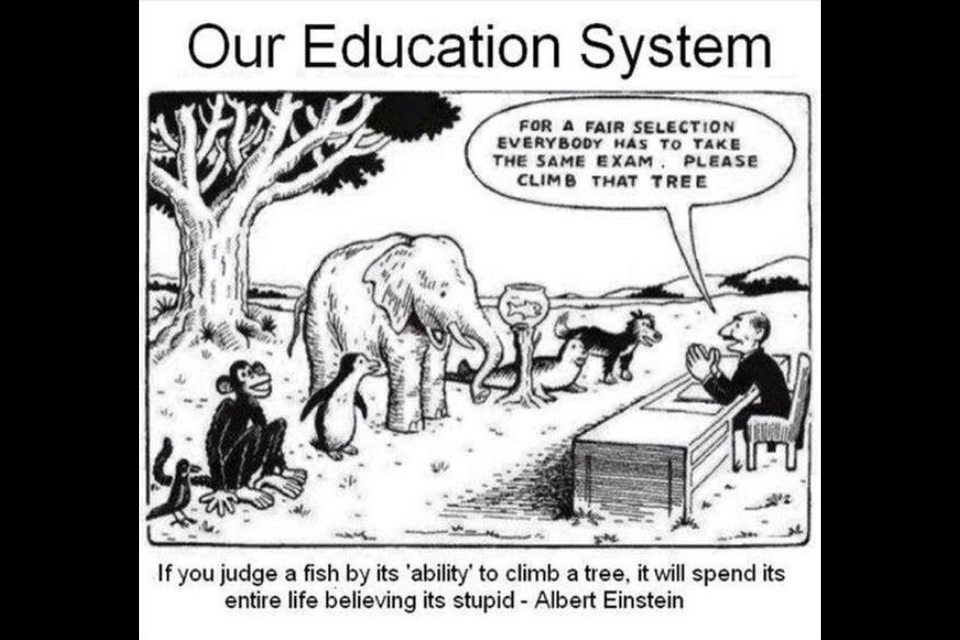
-
 I've been trying to figure out my definition of the word "normal" all afternoon, and I'm having a really hard time with it...
 -
 Friendship is an amazing thing. It's so odd how you can connect so strongly and completely with other people sometimes. Perhaps the be...
 -
Pythagorus is on his way to McDonald's to get lunch for the four of us. I'm getting french fries. I know academically that this is...